

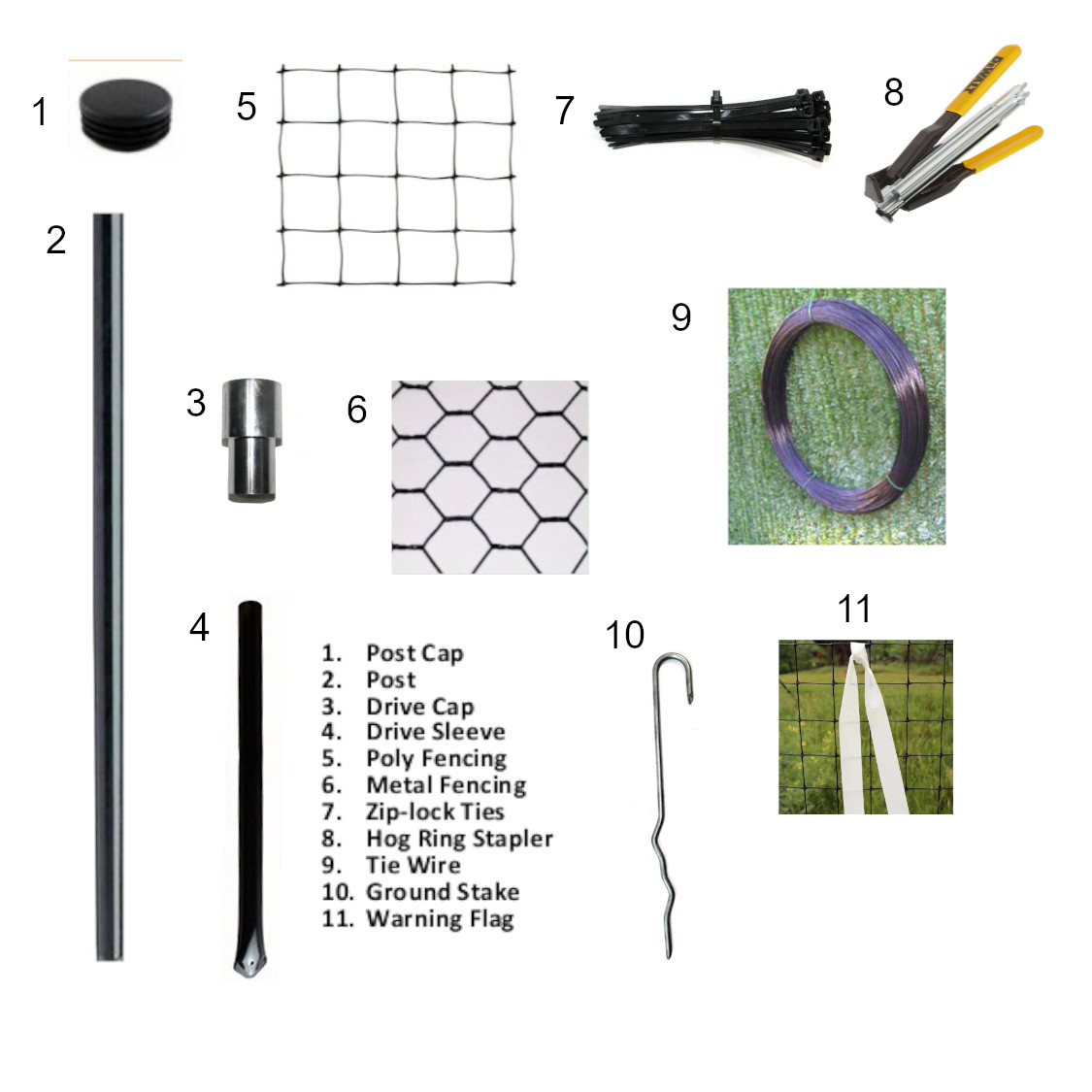
Introduction
Confused about deer fence kits? Not even sure what a deer fence kit is? You’re not alone. Promoters, touting the benefits of buying deer fence kits, say their kits have everything you need. But each kit is different. So how are you to know if any given kit has what you need or not? Well, the rules for determining what’s best are actually fairly simple. Briefly, here’s how to choose a deer fence kit:
The Basics
First, look at the basics. Complete deer fence kits feature different kinds of fencing and create fences of different heights. The three types of fencing commonly offered are plastic, hexagonal metal (like small-mesh chicken wire), and welded wire fencing. So long as the plastic fencing is strong enough (with a breaking strength of 650+ pounds per linear foot) all these different kinds of fencing can reliably keep out deer, and all tend to fade into the background. All are strong enough, and in general all are black.
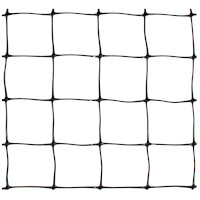
The plastic fencing, typically used to keep deer out of gardens, costs about half what its metal cousins cost and lasts about half as long, typically 10+ years. It also requires add-ons (a strip of metal fencing at the bottom and a top support wire at the top). So remember, don’t get a kit with plastic fencing unless it includes these.
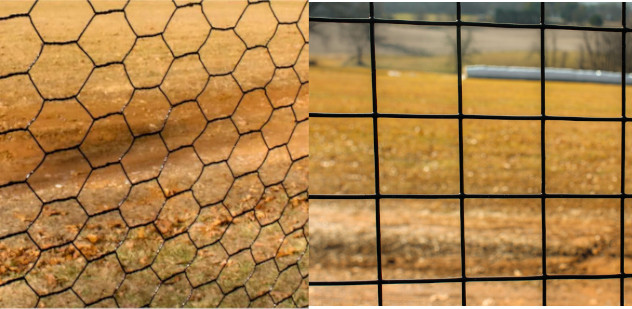
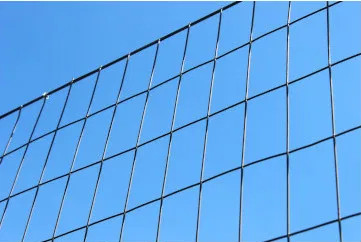
Hexagonal metal fencing, a really good fencing for deer control, needs a top support wire, but it needs no additional metal fencing at the bottom. Welded wire fencing, typically used in a heavy-duty deer fence kit, needs neither bottom fencing nor top support so long as the posts are kept fairly close together — not over 10 feet apart.
In all cases, however, you should fold about 6 inches of metal fencing outward at the bottom and stake it down, because deer love nosing under fences. Hence, if your vendor is following good deer fence practices, a metal kit’s fence height will be 6 inches shorter than the width of the metal fencing in the kit. Vendors often don’t do this, because it makes the kit shorter, and hence makes it more expensive per foot of height. However, failing to do so makes the fence vulnerable to penetration from the bottom.
Fence Height
Well then, what about fence height? Deer fences built from kits typically run from 6 to 8 feet tall. The 6-foot kits tend to be satisfactory for short fences, especially in densely wooded areas and places where the deer pressure is relatively low. The 7.5 and 8-footers are often installed where the fence is long and/or the deer pressure is high. Our own preference is for any fence 7 feet tall or taller, because deer will rarely if ever jump a 7-foot fence just to get to browse. They’ll jump 8 feet or more to get out of an enclosure — if scared by a dog or the fence’s owner. But they won’t jump anything like that to get in.
Fence Post Spacing
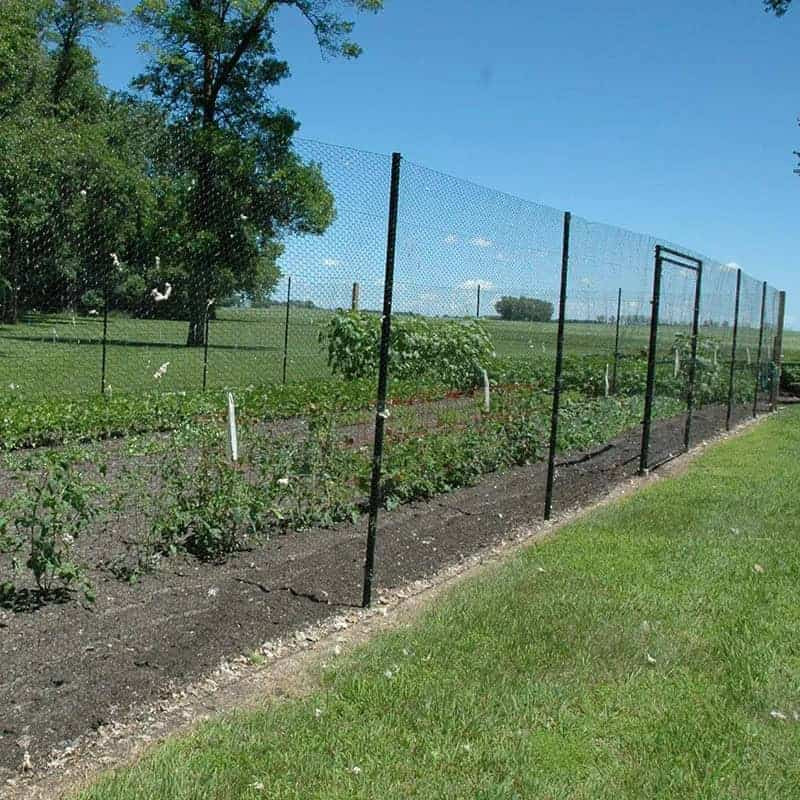
Obviously, posts are a basic part of virtually all durable outdoor fence kits directed at excluding deer. However, posts are tricky, because deer fence kits typically include some fixed number of posts per hundred feet of fence. That looks good, but it makes no provision for braces, gates, or possible snow loads. So here are two good rules of thumb: For welded wire fencing with no top support wire there should be one post, brace post, or gate for every 10 feet of fence. For welded wire fencing, hexagonal metal fencing, and plastic fencing with a top support wire, there should be one post, brace post, or gate for every 12 feet of fence.
Remember, posts are expensive. So, if the kit you are planning to buy does not provide something close to the right number of posts for your project, drop that kit and look around for a kit that does.
Bracing
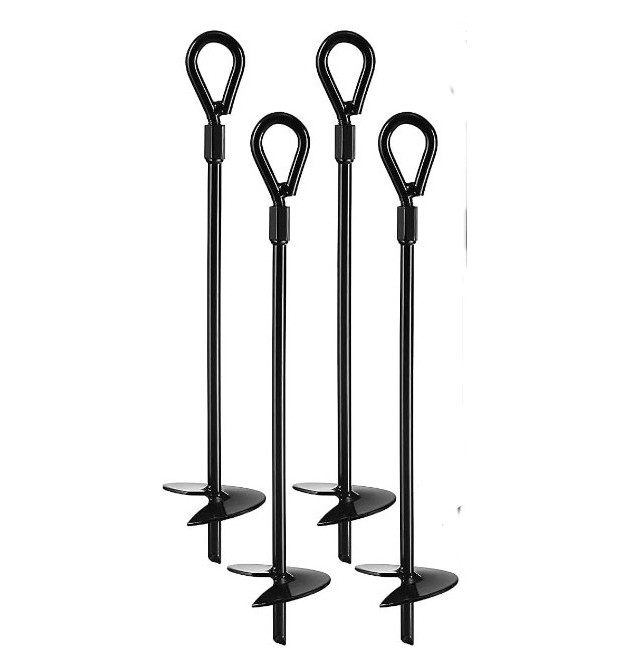
Deer Fence kits typically don’t include corner or end brace posts, because the number of corners and/or ends varies from one project to the next. That’s good for the kit sellers, because corner and end brace posts, besides being cumbersome and highly visible, are expensive. Hence, if the customer sees the kit price first, before the brace posts are added in, it’s more apt to look like an affordable kit. From the vendor’s standpoint, that is a good thing.
This helps explain why my company, McGregor Fence, tends to reject brace posts. Instead of them our kits feature earth anchors, which are more effective, affordable, nearly invisible, and easier to install.
Some people are wary of earth anchors. They understandably don’t want wires hanging outside the fence corners. But if the installer backs up one post and, instead of attaching the earth anchor line to the corner posts, installs two earth anchors right along the fence line before the fencing is put on, between the last post and the next to the last post on both sides of the corner, this problem disappears.
In any case, if you’re getting a kit, be sure to get the right number of corner and end brace posts or earth anchors for your project. Note that as a general rule deer fence kits for fences less than 100 feet long, which includes many garden deer fence kits, do not require bracing. This assumes that no top support wire is being used–because installing a top support wire creates a need for bracing–or that the top wire is not being pulled so tight as to tilt the posts at the corners and/or ends of the fence. For longer fences, get a corner brace post for each corner and an end brace post for each end. Alternatively, if you are using earth anchors, get two earth anchors for each corner and one for each end.
Gates
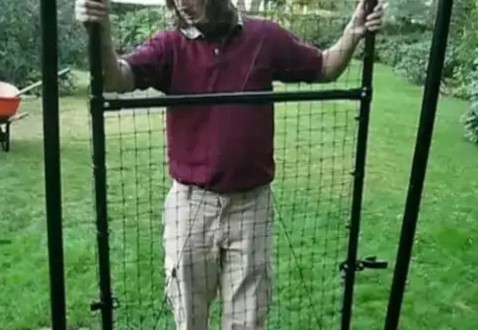
Gates may be offered separately, elsewhere on your vendor’s website; or they may be offered as a fence kit option. In either case they come with their own support posts; they do not come with their own fencing; and they are expensive. Therefore, limit the number and width of your gates to what you really need. Be sure at least one gate is as wide as any heavy gear or vehicle that might need to enter the fenced area. Count each gate as a post, because you won’t need any posts from your deer fence kit to support it. And don’t deduct the width of the gate from the length of fencing needed for your project, because the gate does not come with its own fencing.
Protecting the Fence Bottom
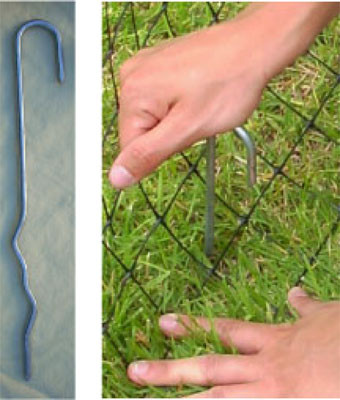
A major shortcoming of most deer fence kits is failure to properly protect the fence bottom. That’s an important omission, because deer don’t want to go over a tall fence, they want to go under it. So they nose about the fence bottom looking for vulnerabilities. And when they find a spot where the ground dips a bit below the bottom of the fence they will poke their noses under the fence, lever it up, squeeze underneath, and go through. They’re really good at that.
Some installers run a taut line along the bottom of the fence to provide protection against this. However, that tends to leave open spaces underneath and get the line into a losing battle with the noses of strong and determined deer.
A better answer, indeed the classic answer, is to fold 6 inches of fencing outward toward the deer and stake it down with ground stakes. This staked bottom fold works better than the bottom wire and much better than ground stakes alone without the bottom fold. Therefore, in selecting a deer fence kit, it is important to be sure that it makes provision for creating a bottom fold — either by folding out 6 inches of the two-foot strip of metal fencing (the bottom guard) needed with plastic fences, or by folding out 6 inches of the main welded wire or hexagonal metal fencing — in these latter cases making the overall height of the fence 6 inches shorter than the width of the metal fencing provided in the kit.
Top Support
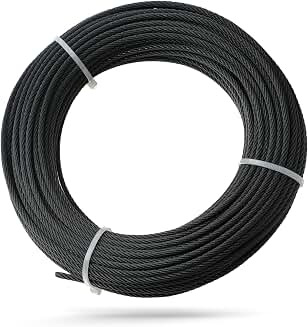
Some deer fences need no top support. Specifically, those with welded wire fencing and posts 10 feet apart or less don’t need it. However, deer fences with hexagonal metal fencing or plastic fencing do need it, because these kinds of fencing tend to sag.
Therefore, make sure any deer fence kit you get with hexagonal metal or plastic fencing comes with a top support wire and appropriate accessories — brace bands to provide an anchor point atop each post, nylon zip-ties for attaching the fencing and top wire to the bolt in each brace band, and nylon zip-ties or a hog ring stapler with staples for attaching the fencing to the top support wire.
As an alternative, at least one vendor offers what is called a tensioning system for top support. It’s more involved and more cumbersome that a simple wire along the top of the fence, but it achieves the same end — preventing fence sag and making the top of the fencing run straight.
Flexibility
As all this suggests, if you’re looking to buy and install a deer fence kit, don’t get one just because it seems superficially similar to what you need and the vendor says it’s good. Instead, follow the guidelines above and look for a kit that will truly meet your needs.