

Confused about deer fence regulations? That’s no surprise. Those regulations vary from state to state, county to county, town to town, and homeowners’ association to homeowners’ association. However, common threads run through them. So it’s worth taking a look, in a general way, at what typical regulations are and how they work.
For starters, nearly all these regulations are directed at fences in general rather than deer fences. They are directed at ugly (e.g. chain link) or vision-blocking fences designed to keep out people (neighbors, kids, intruders, etc.) rather than to keep out deer. And since deer fences are low-visibility see-through fences directed mainly against deer, the scrutiny and regulatory rigor applied to them tends to be rather mild. (Should you need a fencing sample to show to those involved, our packet of fencing samples will provide it.)
Height
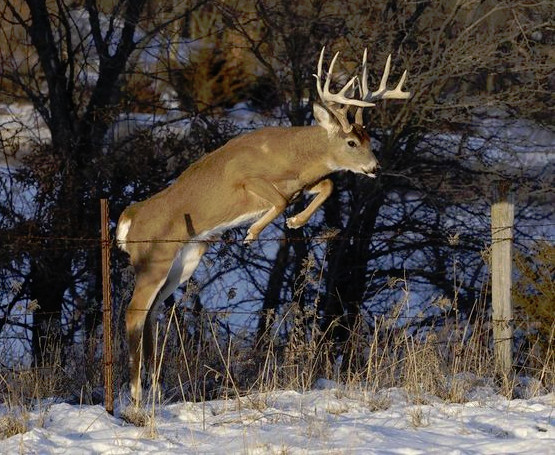
The main issue is height. Many or even most states, plus innumerable local towns and cities, have regulations limiting the height of fences to 6 feet, or even to 4 feet in front yards. That doesn’t mean you can’t have a taller fence. It simply means you should get a permit. In other words, it means contacting the local authorities, finding out what their needs are, and meeting those needs. It may mean getting samples, providing plans, and filling out forms. But, for the most part, nothing is requested that’s not doable.
That’s partly because a reliable deer fence doesn’t need to be much taller than the 6-foot limit, and partly because it doesn’t block anybody’s view. In some cases I have heard of local authorities requiring samples of the fencing to be used, but I don’t recall hearing of local authorities refusing to issue a permit purely because of height. That doesn’t mean it can’t happen, but it’s rare.
Homeowners’ associations are another matter. It’s common for them to have regulations limiting fences to 6 feet, and it’s common for them not to budge. In that case, you need to realize that a 6-foot fence, especially a short one that runs around a small garden or one that runs through woods, can reliably keep out deer. Be sure not to put anything along the fence top that defines where the top is, and by all means use low-visibility fencing.
Appearance
While height is the major issue, it’s not the only one. Both local authorities and homeowners’ associations may want to see samples of your fencing material and may want to get an idea of how your fence will look. If a permit is needed, that’s a fairly ordinary part of the permitting process.
Other Issues
Fencing running on or near property lines, sidewalks, or easements may raise another set of issues. Building codes and homeowners’ associations may have setback requirements, so that the fence will need to be set back a certain number of feet from a property line or public sidewalk. Or else, there may be rules about placing a fence right on a property line, such as requiring that your neighbor first be notified, or even requiring that a fence on the property line be shared property.
There may also be easements for local utilities that cross your property, and it’s worth ensuring that your fence does not encroach on them. It’s also possible that places where you want to dig or install posts in the ground run close to power, water, or gas lines.
For all these reasons, if there’s any chance that the fence will go on or near a property line, easement, or utility line, you want to know where that line or easement runs. That means you should find some relevant plan or have one made, and should speak with the parties involved. It sounds like a lot, but it’s really just common sense.
Swimming Pool Fences
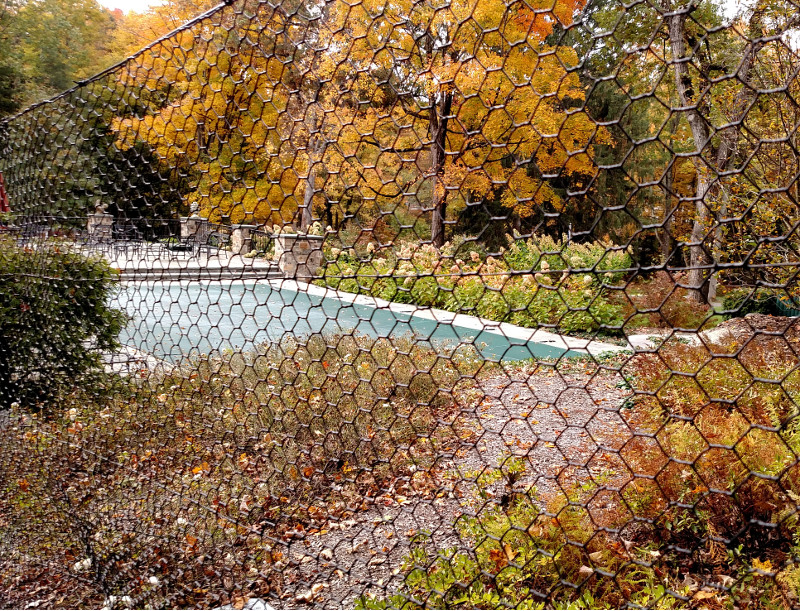
Sometimes people want to use deer fences as swimming pool fences – especially since metal hexagrid and welded wire fencing qualify as suitable swimming pool fencing in most states. In that case, you or your installer will have to file for a permit and should expect careful examination by the authorities.
Here the main issue is not height. The main issue is protecting children. So expect that your fence will need a self-closing lockable fence gate as well as fencing that children cannot penetrate with scissors. That means no plastic deer fencing. Metal deer fencing (metal hexagrid or welded wire fencing) is usually acceptable because the aim is not to keep out determined trespassers with wire cutters. The aim is to keep out unaccompanied unwary kids.
Conclusions
That pretty well sums it up. As all of this suggests, the vast bulk of these regulations and permit requirements are not targeting deer fences directly. Rather, they are including deer fences within a larger class of structures (fences) for which they were designed.
This doesn’t mean that whatever regulations exist should be ignored. Fortunately, they are generally written down in black and white and are not hard to find. So for those deer fencers rightly concerned about local fence regulations and permit requirements that may pertain to them, brief contact with your local building inspector’s office and/or homeowners’ association will typically provide enlightenment and clear the air.