

The Basics
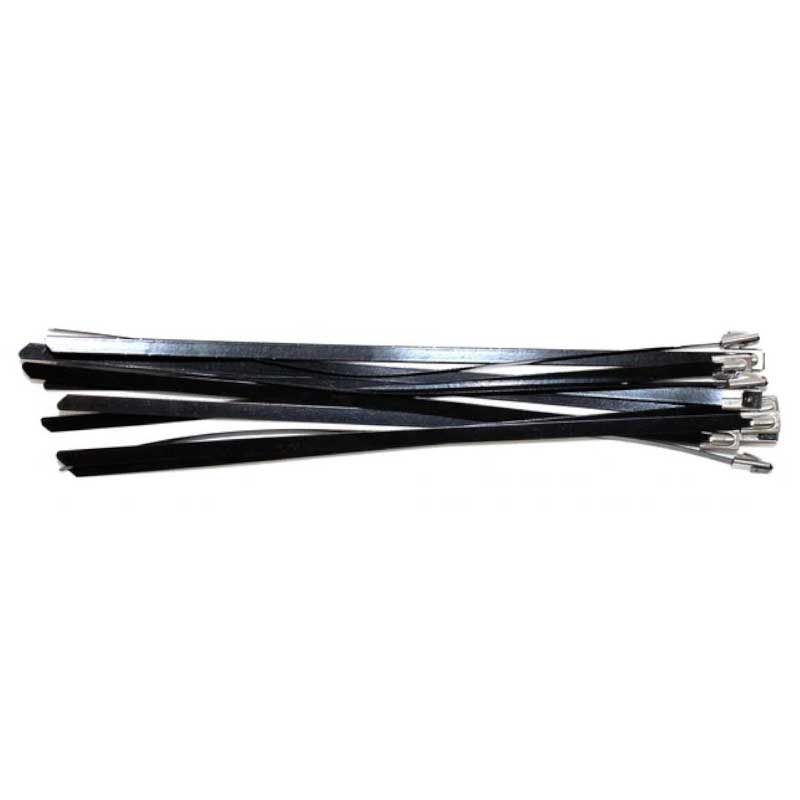
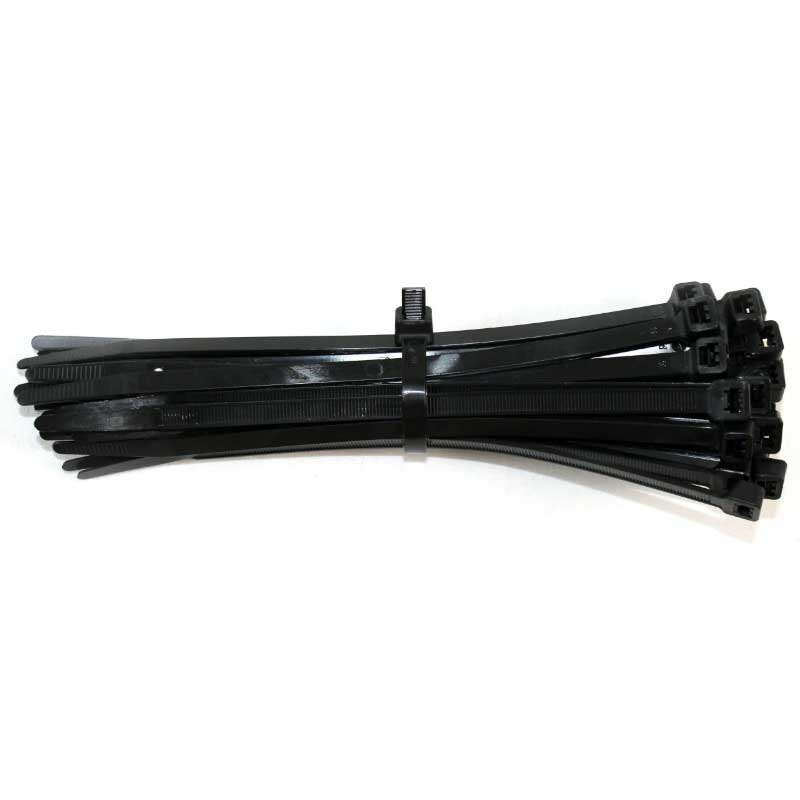
Use the zip-ties below for attaching your fencing to metal posts (both round metal posts and T-posts). Get nylon ties for plastic fencing and long-lasting stainless steel ties for metal hexagrid or welded wire fencing.
Plan on applying about 1 tie per foot of post. Also, if you have a top support wire, use 1 nylon tie per brace band to attach your fencing and wire to the bands.
If you plan not to use a hog-ring stapler, use the nylon ties to attach the top of your fencing to the top support wire. Also, if you have a bottom guard and no hog-ring staples, you can use the nylon ties to attach the upper portion of the bottom guard to the bottom of your fencing.
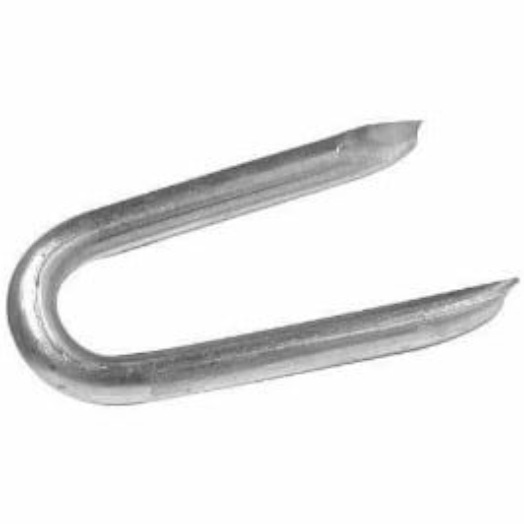
Use the U-nails for attaching your fencing to wooden posts and trees. For more information see Details below.
Details
As noted above, deer fence builders use black stainless steel and nylon zip-ties mainly for attaching the deer fencing to round metal posts or T-posts, applying about 1 tie per foot of post.
Nylon ties are also used to attach top wires and the top of the fencing to brace bands, by passing the tie under the bolt in the brace band (and around the wire and fencing) before drawing it tight. Don’t use stainless steel ties for this job, as they do not close completely.
For those without hog ring staplers, nylon zip-ties can also serve for attaching the top of the fencing to a top wire, using about 1 tie per foot of wire. And they can be used for attaching a bottom guard to the bottom 18 inches of a plastic fence, using about two ties per foot of bottom guard.
Regarding the U-nails, use the 1.25-inch nails to attach deer fencing to wooden posts, and use the 1.75-inch nails to attach it to trees. In both cases plan on pounding in about 5 U-nails per post or tree. In the case of trees, be sure to leave enough space under the “U” of the U-nail so that the tree can grow into it over time without damaging the fencing.